Political Science 221, Latin American Politics Winter Term 2005
Session 6: Democratization and The Problem of Governability: Venezuela, Colombia, and The Central Andean Countries (Peru, Bolivia, and Ecuador)
I. What are the threats to sovereignty in Venezuela, Colombia, and the Central Andean states?
A. Defining Sovereignty (graphic) (graphic)
B. Eroding Sovereignty in Venezuela, Colombia and the Central Andes (graphic) (graphic)
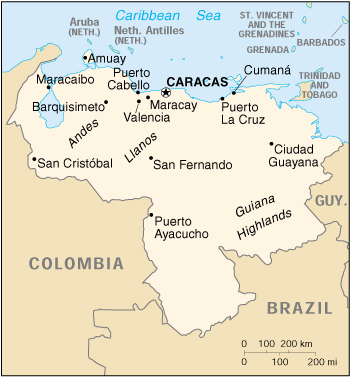
1) The Peru-Ecuador Border Conflict (graphic) (graphic)2) The Collapse of the Party System in Venezuela (graphic)
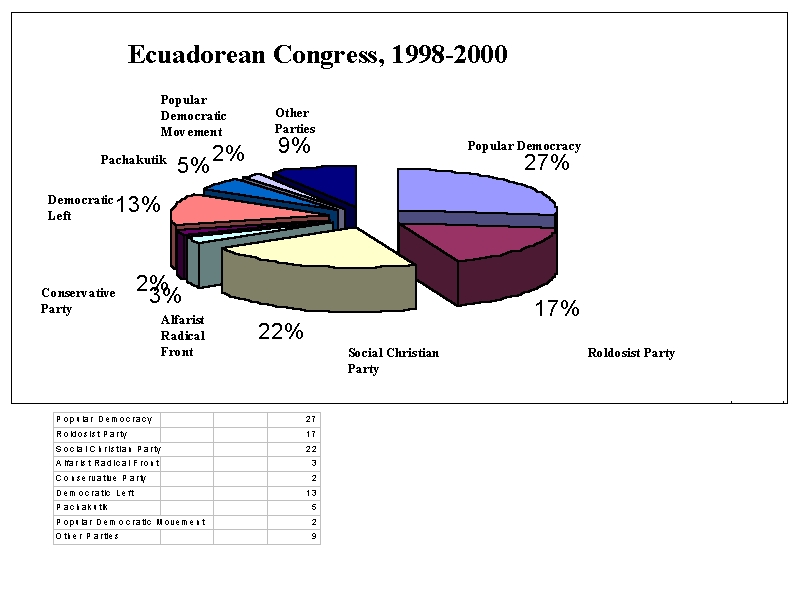
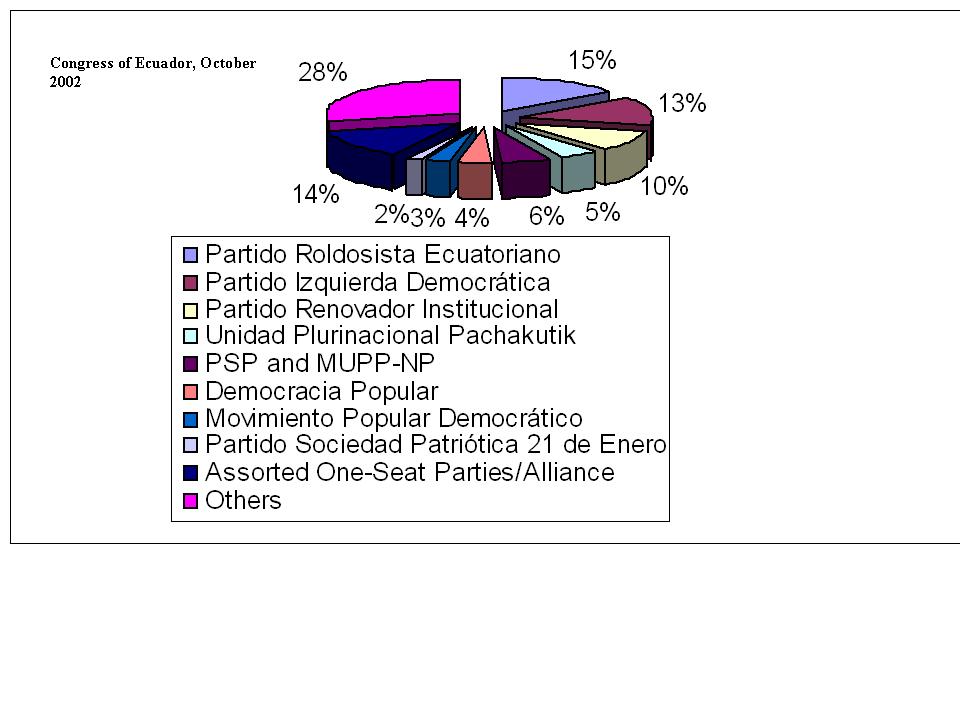
3) “People Power” in Ecuador (graphic) (graphic)
4) The Fragmentation of Internal Sovereignty in Colombia and Peru (FARC) (Sendero)
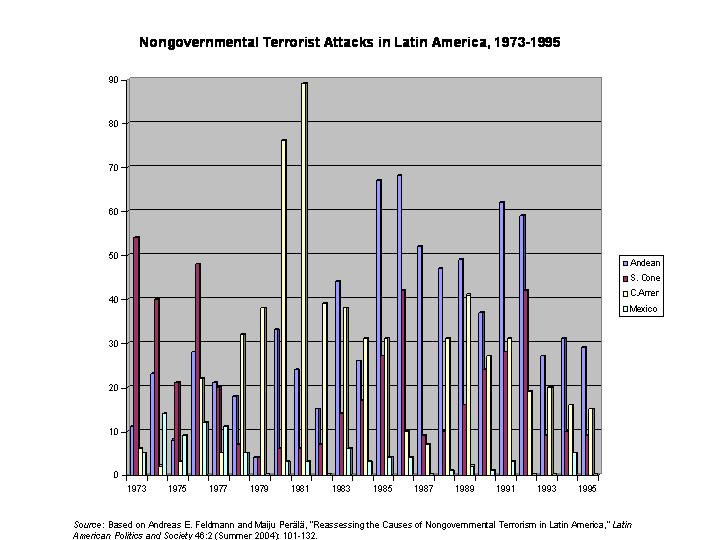
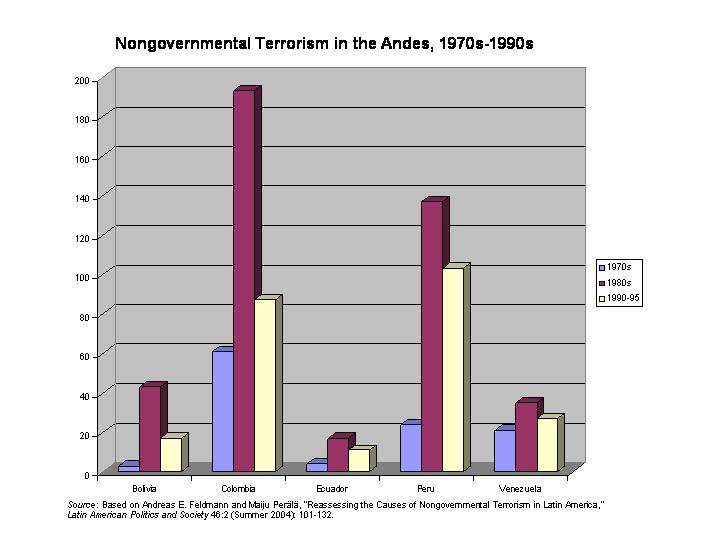
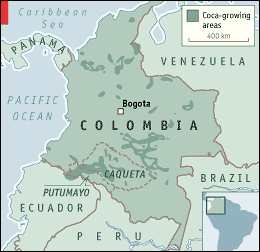
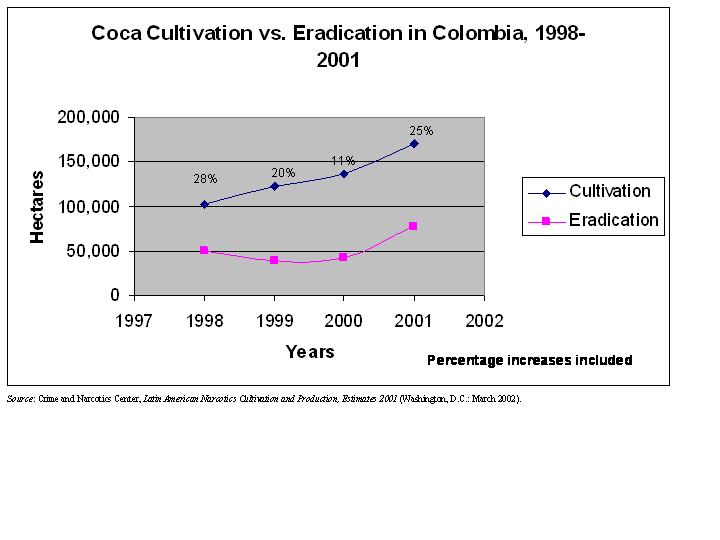
5) The Scourge of Drug Trafficking (graphic) (graphic) (graphic)
II. Do the failures of the states in Colombia, Venezuela, and the Central Andes open the way to alternative systems of governance? Evidence from three cases:
A. Delegative Democracy as a Response1) Alberto Fujimori (graphic) (graphic)2) Hugo Chávez
B. Three Cases
1) Villa El Salvador2) NGOs in Ecuador
3) Bolivia’s Reforms
III. Can democracy survive attacks on the sovereignty of these states?
Simulation #1: "Delegative Democracy"
Key Concepts: sovereignty; state capacity; delegated rule; citizenship; O’Donnell’s “crisis of the state” and the “satellite map” (blue, green, and brown areas); disloyal opposition; narco-terrorism; NGOs; “governance”; PERU: Sendero Luminoso; “states of emergency”; barriadas; the Peruvian autogolpe; Tupac Amaru; National Intelligence Service (SIN); “faceless judges”; Fujimori’s packing of the Constitutional Tribunal; the Ashaninkas; APRA; National System for Support of Social Mobilization (SINAMOS); COLOMBIA: la violencia; the National Front; the Revolutionary Armed Forces of Colombia (FARC); the Liberal and Conservative parties of Colombia; the United Self-Defense forces of Colombia (AUC); National Liberation Army (ELN); Plan Colombia; BOLIVIA: the Nationalist Revolutionary Movement (MNR); the Movement of the Revolutionary Left (MIR); Democratic and Nationalist Action (AND); the “New Economic Policy”(NEP); ECUADOR: Social Investment Funds (FISE); National Planning Agency (CONADE); the “Modernization Law”; Confederation of Indigenous Nationalities of Ecuador (CONAIE); VENEZUELA: rentier state; Pact of Punto Fijo; cogollismo; the Caracazo; Acción Democrática (AD); Comité de Organización Política Electoral Independiente (COPEI); Comisión Presidencial para la Reforma del Estado (COPRE); La Causa R; Movimiento al Socialismo (MAS); Convergencia Nacional (CN); the Patriotic Pole.
Key Individuals: PERU: Haya de la Torre; Abimael Guzman; Belaúnde Terry; General Juan Velasco Alvarado; Morales Bermúdez; Alan García; Mario Vargas Llosa; Alberto Fujimori; Vladimiro Montesinos; COLOMBIA: Manuel “Sureshot” Marulanda; General Manuel José Bonnet; César Gaviria, Ernesto Samper; Andrés Pastrana; Horácio Serpa; Álvaro Uribe; BOLIVIA: General Hugo Banzer Suárez; Víctor Paz Estenssoro; Jaime Paz Zamora; ECUADOR: Rodrigo Borja; Sixto Durán Ballén; Jamil Mahuad; Antonio Vargas and CONAIE; Gustavo Noboa; VENEZUELA: Rafael Caldera; Jaime Lusinchi; Carlos Andrés Pérez; Hugo Chávez.
Floating Comprehensive Exam Questions: Answer One (Due Thursday, February 24)
(A) Compare cases of economic or social reform “success” and “failure” in two of the following countries: Mexico, Venezuela, Colombia, Peru, Ecuador, or Bolivia. Identify three main factors that explain success and failure.
(B) Compare three countries from this session that have fundamental problems of governability (e.g., Venezuela, Colombia, Bolivia, and Ecuador). Evaluate to what extent one of the three has dealt with its governability problems better than the others. Be clear about what constitutes an effective response to a problem of governability.
Note: If you choose not to answer one of these questions, you will have one more set of exam questions to satisfy the two question requirement. If you have not answered an exam question to date, you must answer one of these. Difficulty level increases with each set.