B. The Institutions of British Democracy
1) The Expanding Franchise2) The Evolution of Rights
3) The Westminster System
4) Party Strength (The Labour Party) (The Conservative Party)
5) The Policymaking Process (graphic)
6) The Role of Tradition
Political Science 120, Comparative Political Regimes, Winter 2005
Session 2: The Advanced Capitalist States: Class Alliances and Democracy
Britain
I. The Social Origins of Democracy
A. The Classic Marxist Approach (graphic)
B. Barrington Moore's Argument (graphic)
C. Significance of Moore's Argument (graphic) (graphic)
D. The British Case
E. Critique of Moore's Argument (graphic)
II. The Institutional Approach to Democracy
A. Why Institutions Are Important to Democracy (graphic)B. The Institutions of British Democracy
1) The Expanding Franchise2) The Evolution of Rights
3) The Westminster System
4) Party Strength (The Labour Party) (The Conservative Party)
5) The Policymaking Process (graphic)
6) The Role of Tradition
III. British Economic Development
A. The Political Economy of the British Empire1) The Hegemonic Stability Argument2) The British Hegemon (graphic)
3) The Impact of Britain's Decline
B. The American Hegemon (graphic)
Handouts and Links:
Floating Exam Handout
Key Concepts: classes, class conflict, bourgeoisie, dictatorship of the proletariat, "sacks of potatoes," patron-client ties, socialism, bourgeois revolution, revolution from above, peasant revolution, strong bourgeois impulse, commercialization of agriculture, labor repressive v. market agriculture, the coalition of iron and rye, Junkers, the English gentry, path dependency, historical causes, critical juncture, modernization theory, Meiji Restoration, autonomy of the state, proximate causes, contingent consent, self-binding institutions, bounded uncertainty, collective responsibility, hegemonic stability, public good, the Gold Standard, market for distress goods, lender of last resort, counter-cyclical finance, Gresham's Law, Bretton Woods, "as good as gold," n-1 problem, the compromise of embedded liberalism, conditionality.
Key Individuals: Barrington Moore, Theda Skocpol, Seymour Martin Lipset, Karl Polanyi, Charles Kindleberger.
Study Questions:
(1) What were the key events/processes/factors that led to democracy in Britain? Specify the three most important.
(2) Which institutions (or traditions) of British democracy would you consider to be the least democratic? List at least two and explain why these should be deemed undemocratic.
(3) Does Tony Blair's "New Labour" represent a continuation or a significant rupture with Britain's recent history of economic and social modernization? Specify at least two ways in which Blair is representative of continuity and two ways in which his "New Labour" might be considered an important break with the past.
(4) Have post-9/11 events transformed the British PM into a new major actor on the global stage? What have been the challenges to his leadership posed by the Iraq war?
Floating Comprehensive Exam Questions: Answer One (Due Tuesday, Feb. 1)
(A) Barrington Moore argued that the origins of democracy are based on particular social conditions. Discuss Moore’s argument by highlighting aspects of the British experience that confirm and/or challenge his interpretation. Based on your analysis, determine whether Moore’s analysis might be useful in studies of democratization. What are its advantages and disadvantages?
(B) Discuss how Britain might be used as a model for building democracy in other countries. Be sure to specify the three main elements of British democracy that could and should be transplanted to other countries.
Note: If you choose not to answer one of these questions, you will have five more sets of exam questions to satisfy the two question requirement. Difficulty level increases with each set.
Political Science 120, Comparative Political Regimes, Winter 2005
Session 2: The Advanced Capitalist States: Class Alliances and Democracy
The European Union
IV. The European Union
A. What is the EU? (population) (area) (GDP) (trade) (exports) (aid) (functions)1) Basic History (graphic)2) The Problem of Sovereignty (Voting assignment)
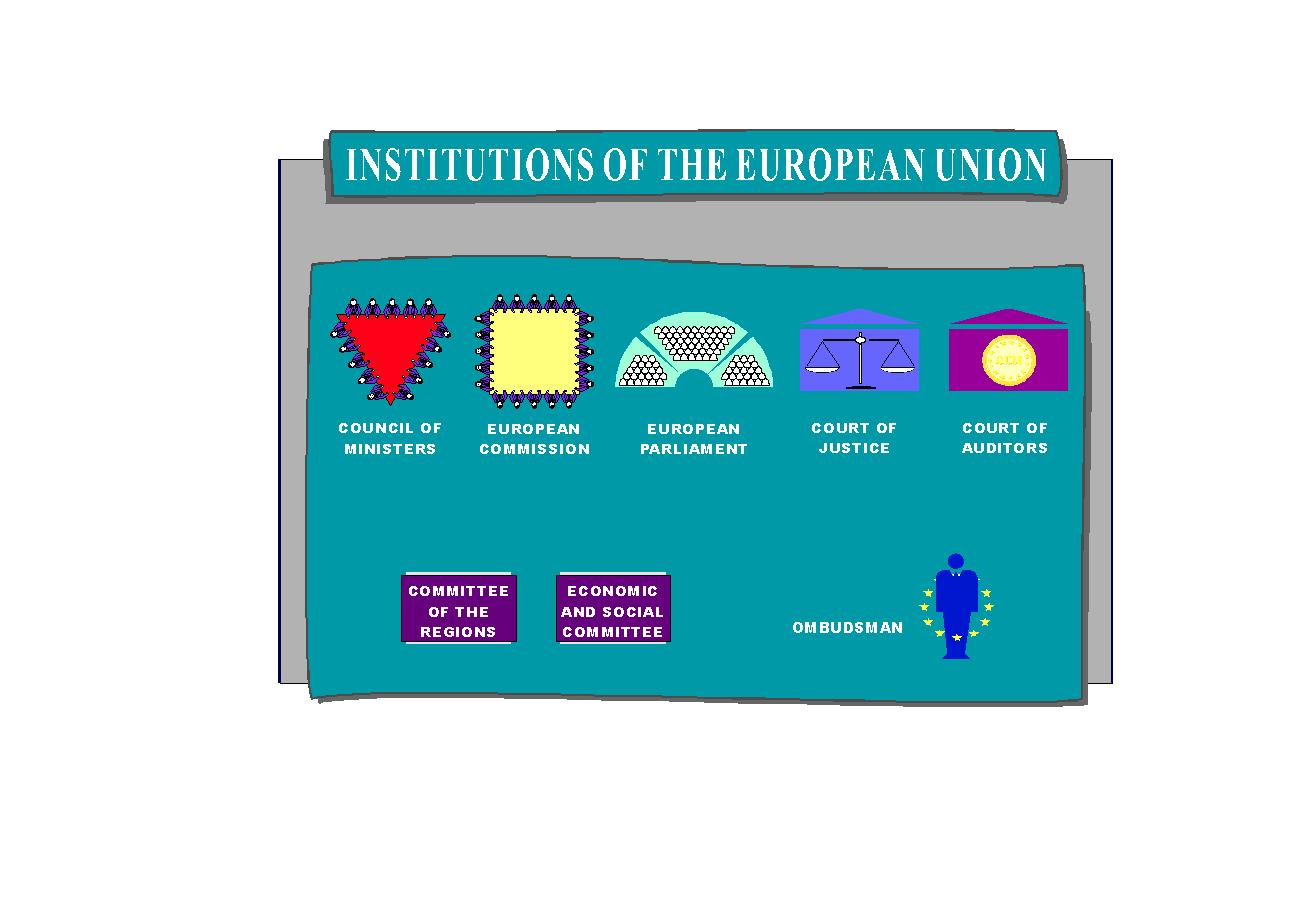
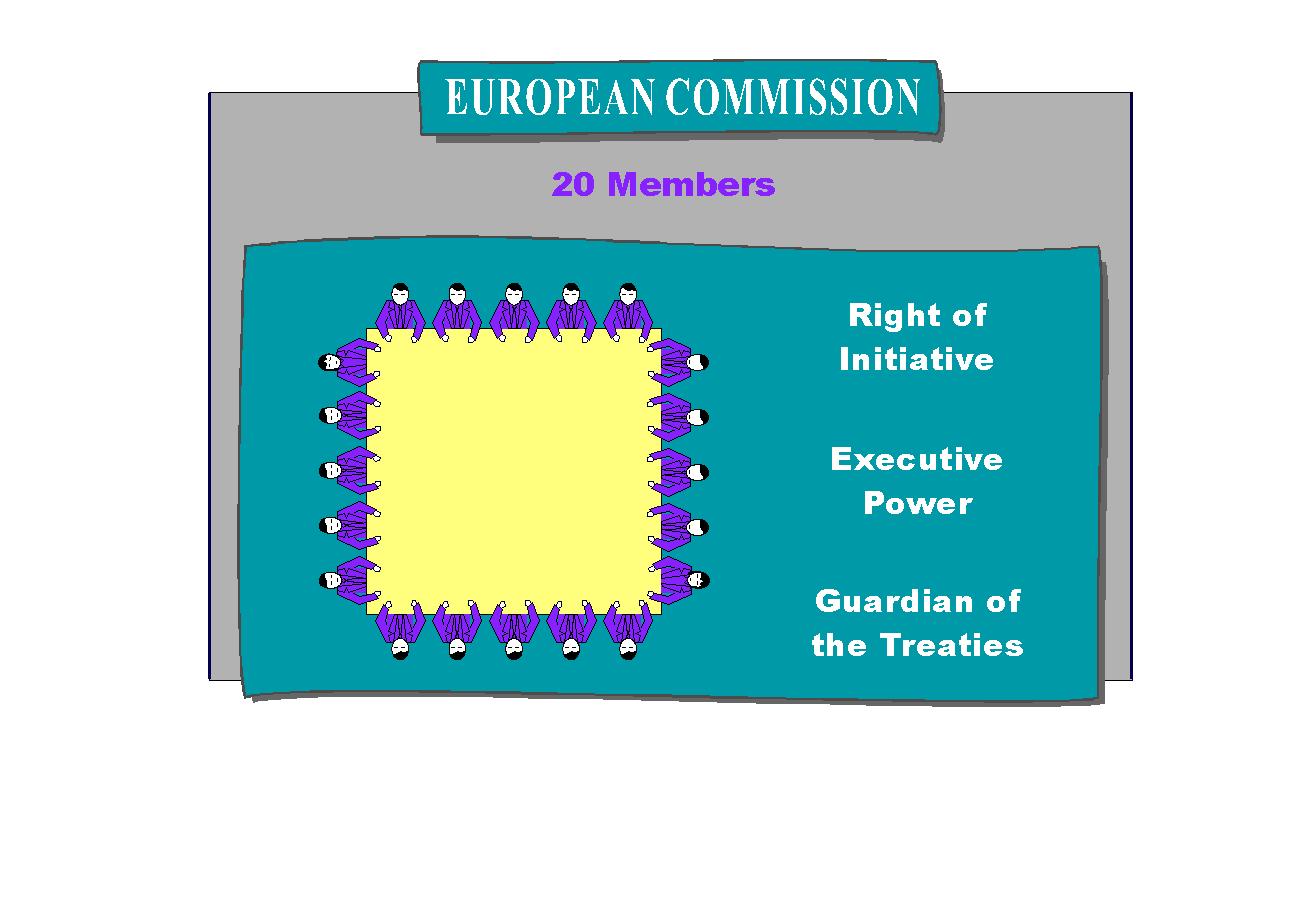
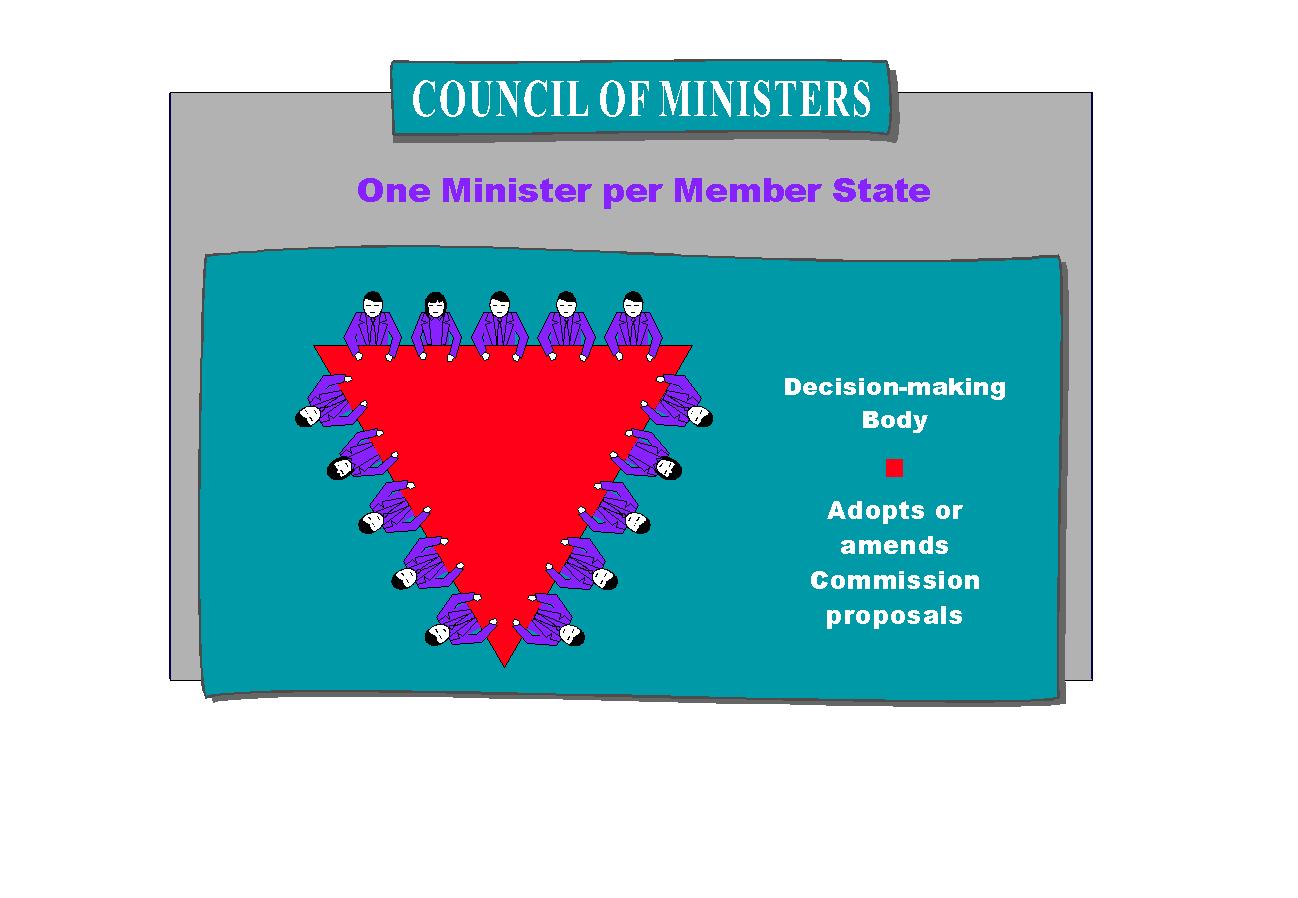
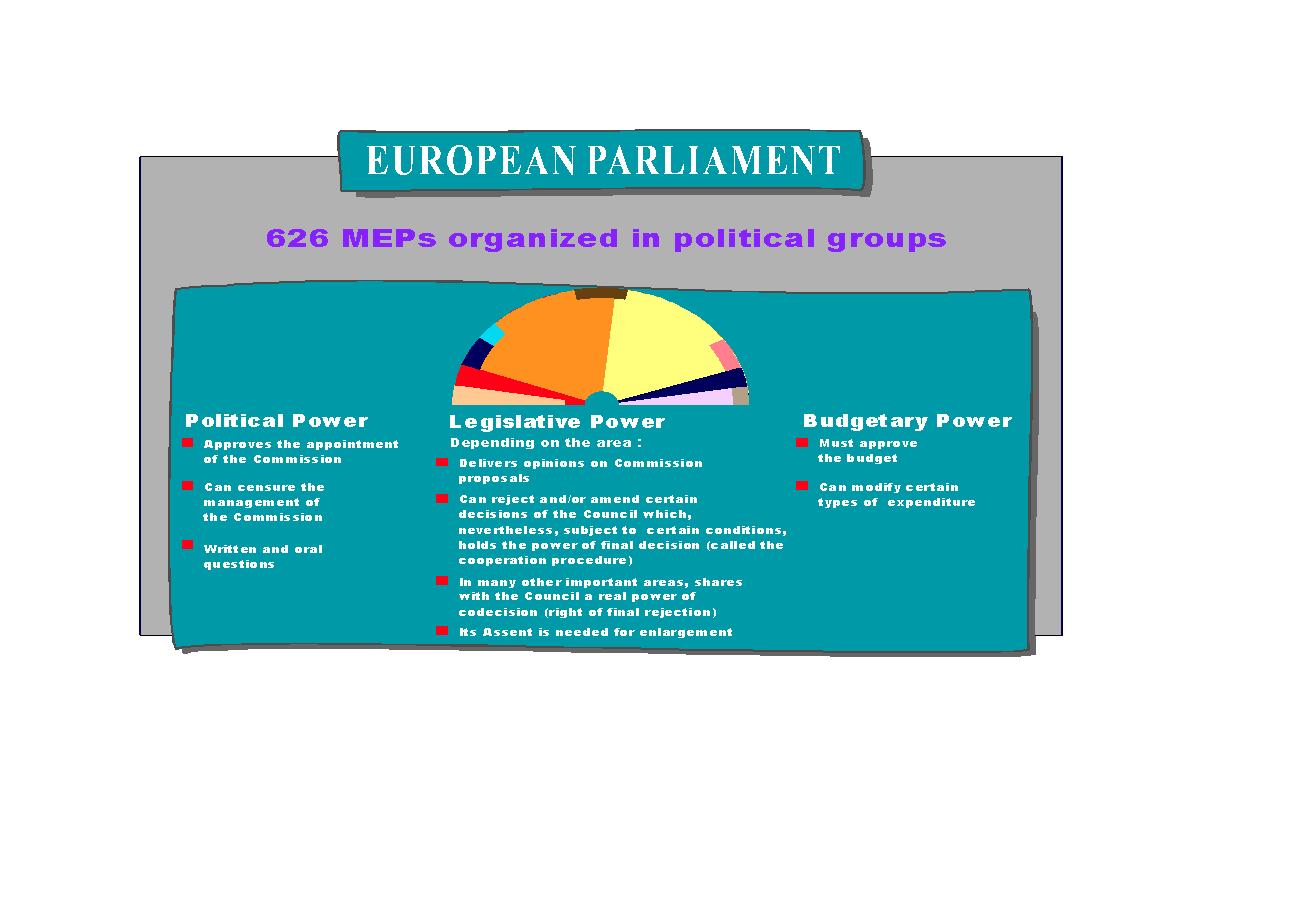
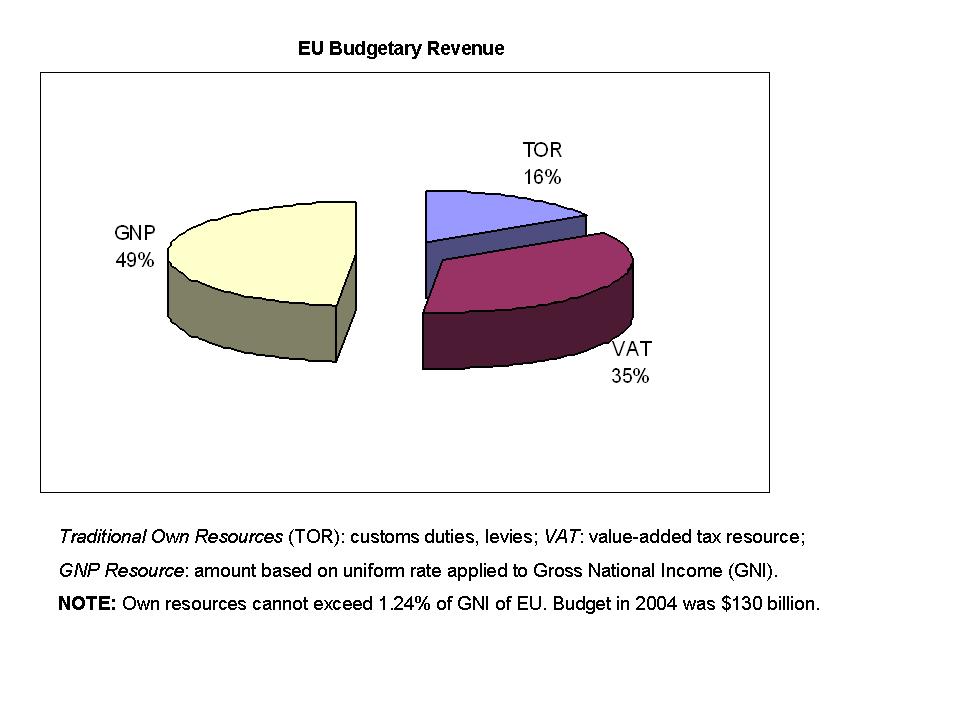
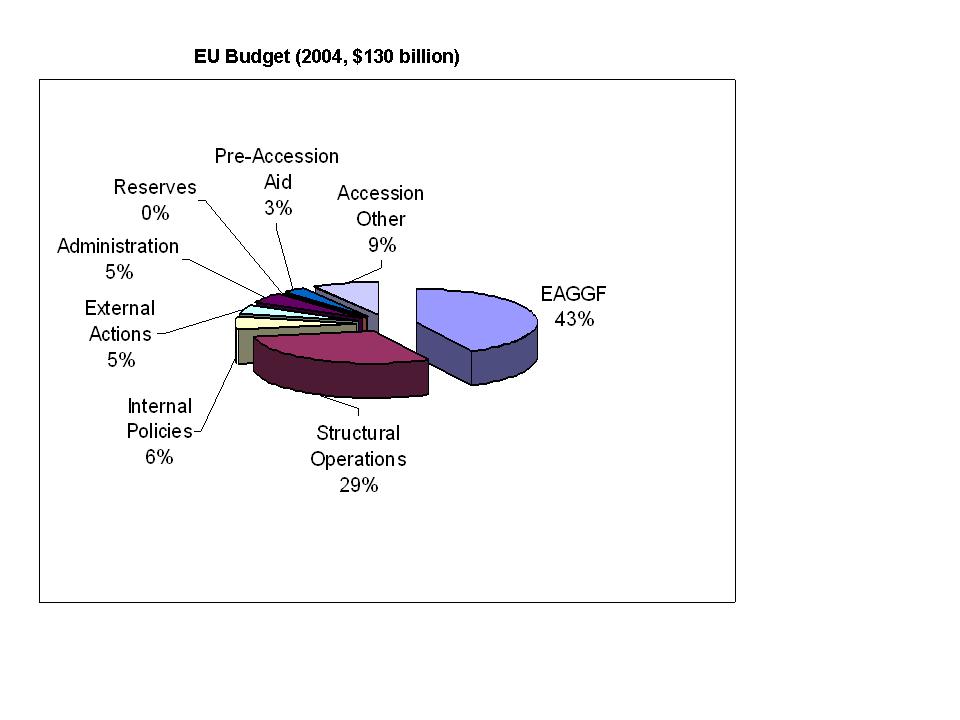
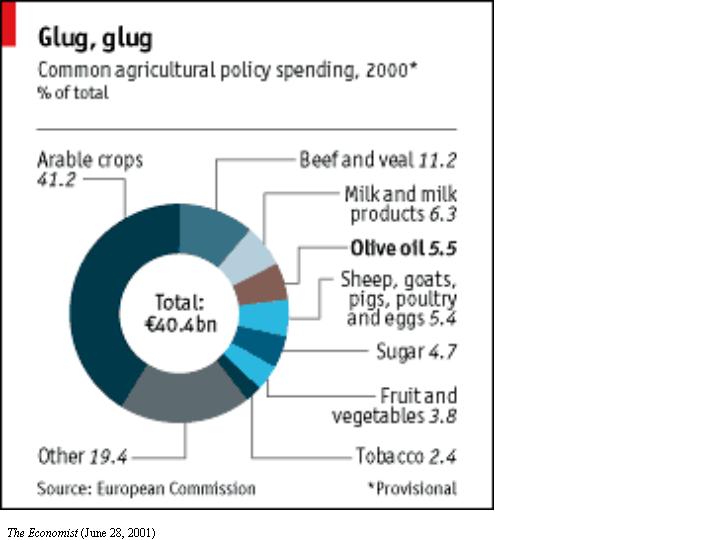
3) Structure and Functions (EU Institutions) (Commission) (Current Commission) (The DGs) (Council of Ministers) (EU Parliament) (Codecision) (Codecision Step by Step) ("Democratic Deficit") (Revenues) (Financing) (Spending) (CAP Spending)
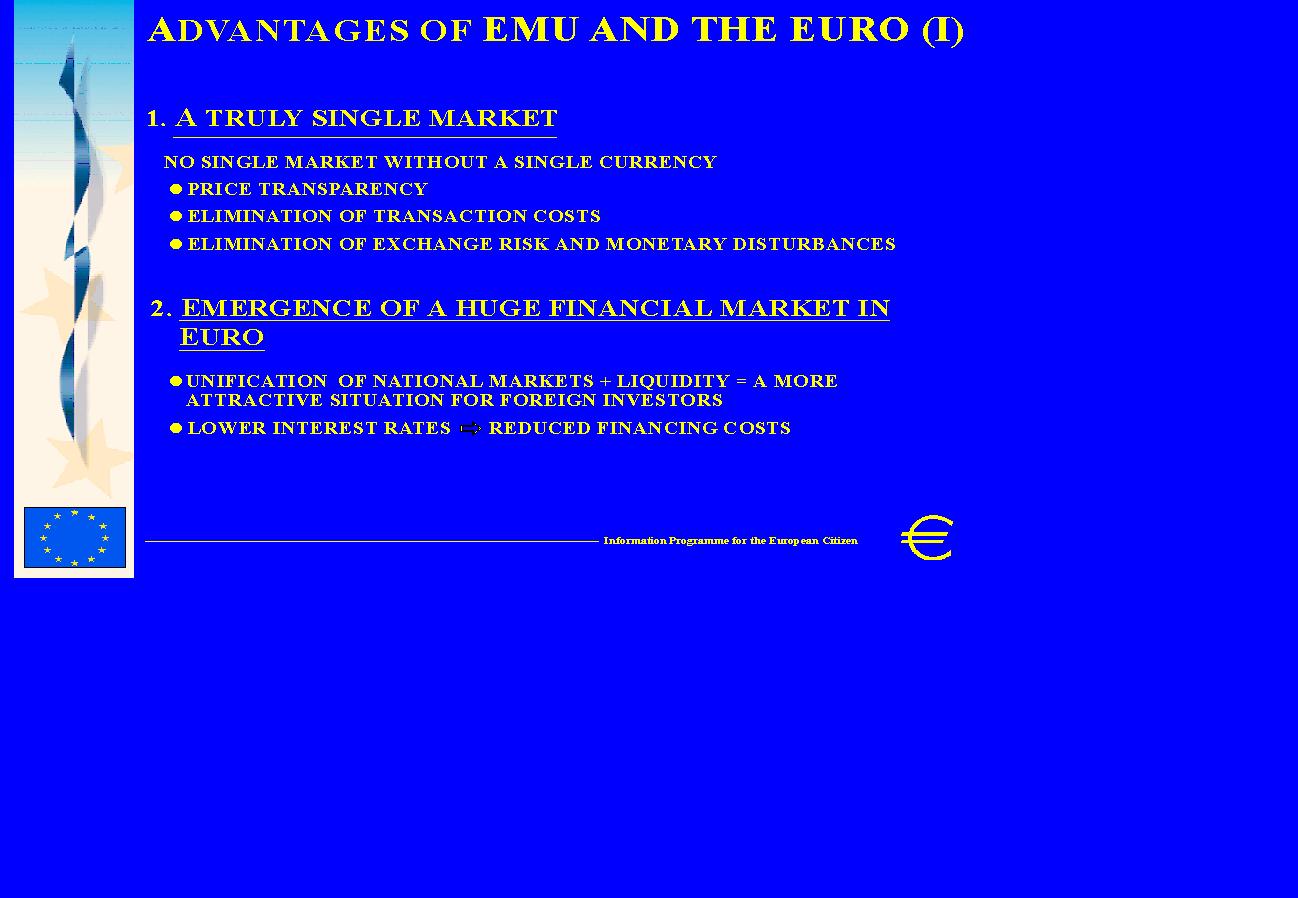
4) The Maastricht Treaty (1992) (Reasoning behind EMU (1)) (Reasoning behind EMU (2))
B. The Issue of Monetary Union 1) Monetary Union in Three Steps
2) The Problem of Central Bank Independence
3) The Problem of Asymmetric Shocks
C. The Issue of British Participation
Handouts and Links:
EU Debate Handout
Key Concepts: supranational organizations, the Benelux Customs Union, the European Coal and Steel Community (ECSC), common external tariff (CET), the Treaty of Paris (1951), the European Economic Community (EEC), the Treaty of Rome (1957), the Common Agricultural Policy (CAP), the Luxembourg Compromise (1966), the European Commission, the Council of Ministers, the European Parliament, the European Court of Justice, the European Council, Court of Auditors, European Central Bank (ECB), Inter-Governmental Conferences (IGCs), the principle of subsidiarity, value-added tax (VAT), cohesion funds, co-decision, the democratic deficit, the Maastricht Treaty (1992), "Europe without frontiers," the Single European Act (SEA), the Common Foreign and Security Policy (CFSP), the European Monetary System (EMS), the Exchange Rate Mechanism (ERM), the ecu, the euro, capital controls, the Maastricht convergence criteria (also, the "growth and stability pact"), conversion rates for the euro, optimal currency area, non-tariff barriers.
Key Individuals: Jean Monnet, Robert Schuman, Charles de Gaulle, Jacques Santer, Romano Prodi, Jacques Delors, Gerhard Schröder, Jean-Claude Trichet, Wim Duisenberg.
Study Questions:
(1) What are the key challenges to building a “European (supranational) identity?” List the three most important in order. Be prepared to support your choice of order.
(2) What have been the three most important institutional changes in the European Union in recent years. Be prepared to support your choice of order.
(3) Assess to what extent the project of European monetary union is positive for domestic economies in Europe. Discuss at least three areas in which monetary union will improve domestic economies. Be prepared to also point to two down-sides of monetary union.
(4) Was the recent decision to enlarge the EU-15 to the EU-25 the right one for the supranational organization at this point in its history? Be prepared to support your position in class.
(5) Specify two major advantages to enacting a constitution for the EU and two major disadvantages.
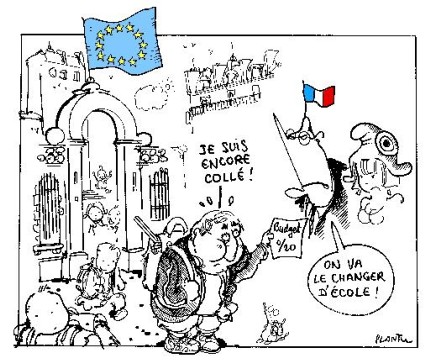
Floating Comprehensive Exam Questions: Answer One (Due Tuesday, Feb. 8)
(A) Is trading off significant degrees of sovereignty worth the benefits of EU membership? Provide an argument and then support it with references to distinct policy areas (e.g., monetary policy, agricultural policy, immigration, etc.). Be clear about the specific benefits and liabilities of maintaining sovereignty versus ceding it to the EU.
(B) Discuss the primary challenges facing the eurozone countries. How might EU institutions address these challenges? Are some of the EU members better able to address these challenges than others?
Note: If you choose not to answer one of these questions, you will have four more sets of exam questions to satisfy the two question requirement. Difficulty level increases with each set.
Political Science 120, Comparative Political Regimes, Winter 2005
Session 2: The Advanced Capitalist States: Class Alliances and Democracy
Germany
V. The Breakdown of Democracy (graphic)
A. Loss of Legitimacy1) Definition2) Crisis of "Unsolvable Problems"
B. EfficacyC. Effectiveness
D. Breakdown
E. The Power Vacuum (graphic)
F. The Case of Weimar Germany
VI. Social Democracy and Its Crisis
A. What Is Social Democracy? (graphic)B. The Structure of German Social Democracy (graphic)
C. Democratic Corporatism
D. The Crisis of Democratic Corporatism
Key Concepts: legitimacy; Zeitgeist; disloyal opposition; semi-loyal opposition; crisis of "unsolvable problems;" irredentism; the multinational problem ("stateness"); "demands-performance gap" ("crisis of rising expectations"); efficacy; effectiveness; peak associations; tripartite negotiations; collective bargaining; societal (democratic) corporatism v. state corporatism; fiscal costs and welfare state reform; labor market flexibility.
Key Individuals: Juan Linz; Adam Przeworski; Peter Katzenstein.
Study Questions:
(1) How does Germany's post-WWII "social democracy" (also called "democratic corporatism") differ from British democracy? List three major aspects of difference. Do these differences make Germany more democratic than Great Britain? Be prepared to support your answer in class.
(2) How is Germany's "social market economy" threatened by the country's current path of modernization? Specify two major reasons and be prepared to discuss them in class.
(3) In what ways can post-WWII Germany's institutions of policy-making be seen as a response to the problems of the Weimar democracy and the horrors of the Nazi period? What are some of the costs of this elaborate process for making policy? Is it prone to produce gridlock?
(4) What are the major challenges that Gerhard Schröder's government faces in shaping Germany's leadership in the EU?
Floating Comprehensive Exam Questions: Answer One (Due Tuesday, Februrary 15)
(A) How has German social democracy been challenged by Germany's membership in the European Union? Be specific about at least three different areas of social democracy.
(B) Compare three major democratic institutions in the United Kingdom and Germany. Which institution produces the most democratic outcomes in both countries? Be certain to define an analytical criteria for evaluating the democratic effects of different institutions.
Note: If you choose not to answer one of these questions, you will have three more sets of exam questions to satisfy the two question requirement. Difficulty level increases with each set.